

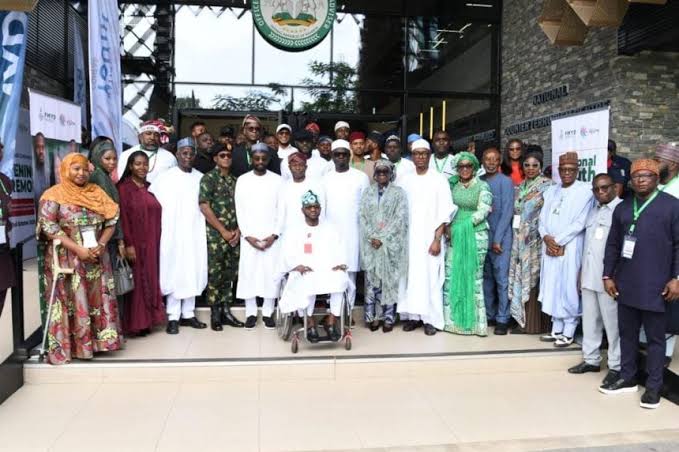
By David Nwokorie
Before the National Youth Conference 2026 was convened, I raised three fundamental questions in my article titled “Dear Nigerian Youth: A Compelling Case for an Atiku Presidency.”
Why had the Federal Government waited until barely months before another presidential election to organise a national conversation about Nigerian youths? How effective could such an exercise be? More importantly, what guarantees existed that its recommendations would survive beyond the political season?
These were not objections to youth engagement. They were questions about timing, institutional seriousness and sustainability.
Now that the conference has concluded and President Bola Ahmed Tinubu has directed the immediate implementation of its resolutions, those questions have become even more relevant.
Nigeria has another conference, another communiqué, another collection of recommendations and another promise that things will change. Unfortunately, our national experience has taught us that promises are considerably easier to make than to implement.
Nigeria’s youth population makes the failure of deliberate youth-development planning particularly troubling. UNFPA estimates that approximately 34 per cent of Nigeria’s population is aged 10–24, representing about 80 million people. Meanwhile, the National Bureau of Statistics recorded youth unemployment at 8.4 per cent among those aged 15–24 in the first quarter of 2024, while 14.4 per cent were neither employed, in education nor in training.
These figures tell only part of the story of underemployment, informality and economic insecurity. Yet, rather than establish a comprehensive national framework for addressing these challenges, youth development has increasingly become an industry of episodic conferences, regional dialogues, workshops and stakeholder roundtables.
Every event produces speeches, photographs and declarations. The participants return home, the banners disappear, and the structural problems remain.
There is something particularly curious about the Minister of Youth Development, Ayodele Olawande’s, declaration that the Federal Ministry is ready to listen and that the Federal Government is ready to engage.
One welcomes the sentiment, but an obvious question follows: where has the Ministry been since its establishment in 2023? Has it taken three and a half years for the administration to discover that young Nigerians deserve to participate in decisions affecting their future?
The Minister’s assurances would have carried considerably greater weight if they represented an established institutional practice rather than the closing message of a national conference.
Indeed, one could almost mistake the Ministry for a travelling lecture service, with the Minister delivering variations of the same reassuring, increasingly soporific speeches at successive youth events.
The rhetoric has become familiar, the promises repetitive and the language thoroughly hackneyed. Nigeria needs a Ministry of Youth Development, not a Ministry of Repetitive Youth Speeches.
An annual National Youth Dialogue, supported by quarterly consultations, published policy recommendations and measurable implementation targets, should have been established from the Ministry’s inception. Youth participation should never have depended on the proximity of another election.
The President’s directive to immediately implement the conference’s recommendations is equally deserving of scrutiny.
His instruction that the Minister work with relevant ministries, state governments, the private sector and development partners to establish priorities, responsibilities, timelines and measurable indicators is reasonable.
But there is something almost fable-like about the proposition that a government which has spent three and a half years discussing youth development will now suddenly translate another conference into transformative action.
It is a familiar political sequence: convene a conference, receive recommendations, issue a presidential directive and announce a new implementation framework. The story sounds complete, at least on paper.
But what happens afterwards?
Even if a 60-day implementation target were contemplated, how much structural change could realistically be achieved within that period, particularly without established funding commitments, institutional responsibilities and a credible baseline?
A framework is not an achievement. A presidential directive is not implementation.
There is also the question of the conference’s national reach.
Although the government described the conference as a platform representing all 360 federal constituencies, six geopolitical zones and the diaspora, many young Nigerians knew little or nothing about the exercise.
How many unemployed graduates, young entrepreneurs, artisans, researchers and students outside established political and institutional networks participated meaningfully? Where are the published participation figures, selection criteria and geographical distribution?
A conference can be nationally branded without being nationally experienced.
Its timing, barely months before another presidential election, inevitably raises questions about its political utility. The concern is that a developmental exercise may have become a carefully packaged political event, presented in the language of inclusion and empowerment to create an impression of governmental responsiveness.
This may not necessarily diminish the contributions of genuine participants, but it makes independent scrutiny essential. Development cannot be established through political cosmetics.
The proposed Multi-Stakeholder Youth Confab Taskforce, Youth Confab Impact Index and youth-led monitoring framework are potentially useful.
However, Nigeria has become familiar with committees, taskforces and implementation documents.
What authority, funding and independence will these structures possess? Will they publish annual assessments of government performance? Will they monitor budgets and actual programme delivery? Will they survive changes in political leadership?
The same questions must be asked of existing Ministry programmes.
What has become of the Nigerian Youth Academy, the Nigerian Youth Development Fund and the Ministry’s help desk? How many young Nigerians have benefited? How much funding has actually been disbursed? How many beneficiaries have secured employment, established sustainable businesses or acquired marketable skills? What has been the geographical reach of these initiatives?
The Ministry owes Nigerian youths a comprehensive performance account since 2023.
If these programmes are working, the evidence should be publicly available. If they are underperforming, Nigerians deserve to know why.
This is where the policy direction associated with Atiku Abubakar deserves serious consideration.
His investments in education and private enterprise, including the establishment of the American University of Nigeria in Yola, demonstrate a long-standing engagement with human-capital development.
His 2023 presidential manifesto proposed absorbing between 50 and 60 per cent of five million annual labour-market entrants, adding at least 100,000 entrepreneurs annually through a proposed entrepreneurship fund, and expanding internship and apprenticeship opportunities to at least two million workers annually.
These proposals articulate a development approach that connects education, enterprise, technical skills and employment rather than treating youth empowerment as a succession of conferences.
The African Democratic Congress also places youth welfare, employment, economic empowerment and accountable governance among its stated commitments.
Nigerian youths must begin to distinguish between political performances and credible development programmes.
A change in leadership must mean more than a change in the personalities delivering speeches. It must produce a different institutional philosophy: one that connects education to employment, innovation to financing, skills acquisition to industry and youth participation to actual decision-making authority.
The central problem with the present APC administration is not that it has failed to organise youth events. It is that, after approximately three and a half years, young Nigerians are still being presented with the promise of a government that is finally ready to listen.
Youth development should not be an electoral afterthought. It should be a permanent national priority, supported by transparent funding, independently evaluated programmes, accessible enterprise opportunities and institutions that function irrespective of political affiliation.
The 2026 National Youth Conference must therefore be judged by what happens after the closing ceremony.
Not by the number of delegates assembled, the speeches delivered or the recommendations announced, but by whether unemployed graduates find meaningful opportunities, entrepreneurs access financing, young innovators build viable businesses and citizens gain genuine influence over public policy.
Conferences can generate ideas, but institutions sustain them. Dialogues can encourage participation, but economic programmes create opportunities.
Nigeria does not need another declaration that its youths are the future. Its young people are already part of the present, and they deserve a government that has been planning for them all along.
About The Author
David Nwokorie is a Nigerian youth advocate and civil rights advocate, a member of the ADC Presidential Campaign Council and Director-General of the Atiku First Movement. He is the Chancellor of The School of Public Policy & Leadership (TSPPL) and President and Founder of the GENDA Foundation.
