

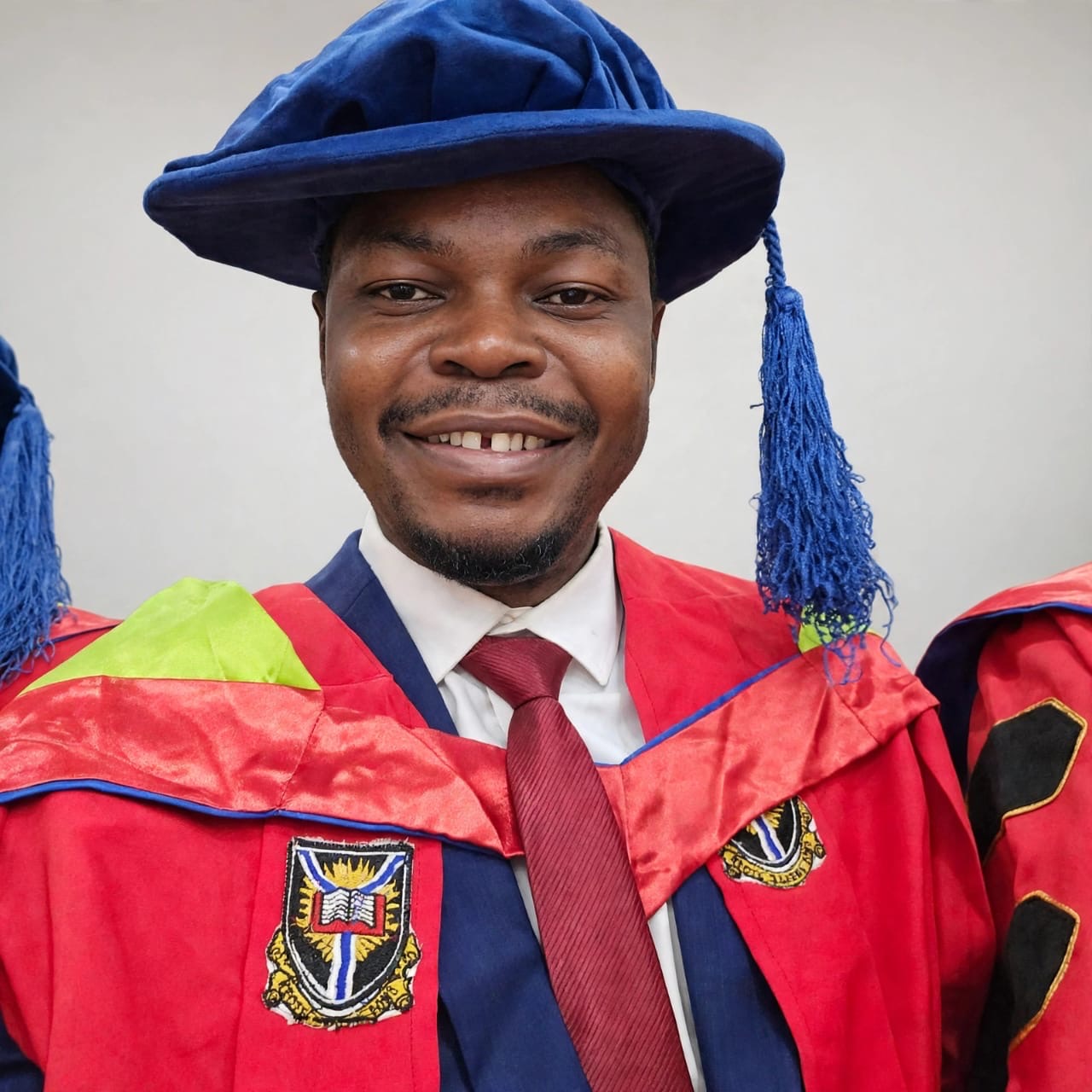
Joel Abah’s three-year doctoral research exposes gaps in humanitarian support, livelihood recovery and the sustainability of aid to displaced communities
As humanitarian organisations scale back operations and displaced families continue to struggle with food, healthcare, shelter and sanitation, a Nigerian scholar has raised questions about the sustainability of humanitarian interventions and whether the assistance provided truly reflects the needs of those it is meant to serve.
Joel Abah, a lecturer and interdisciplinary researcher at the Department of History and International Studies, Prince Abubakar Audu University, Anyigba, Kogi State, was on Monday conferred with a Doctor of Philosophy (PhD) in Peace, Security and Humanitarian Studies by the University of Ibadan.
His doctorate, completed within three years, carries a research focus that brings attention to the conditions of internally displaced persons (IDPs) in Benue State and the gaps that could emerge when humanitarian organisations reduce or discontinue their interventions.
Abah is reportedly the first person from Kogi State to earn a PhD in Peace, Security and Humanitarian Studies from the University of Ibadan, while his research is also described as the first doctoral study in the department to focus exclusively on humanitarian emergencies in IDP camps in Benue State.
But beyond the academic distinction, his research raises a broader question about Nigeria’s humanitarian response: What happens when organisations providing critical services leave displacement camps, and the institutions expected to fill the gaps lack the capacity to do so?
Research beyond humanitarian statistics
Abah said his interest in the study was driven by concerns over the disconnect between the objectives of humanitarian organisations and the actual experiences and expectations of displaced people.
For his doctoral research, he examined five IDP camps — Ichwa, Naka, Anyinn, Abagana and Daudu-II — focusing on food, healthcare, shelter, and water, sanitation and hygiene (WASH).
Rather than examining only the services humanitarian organisations claimed to provide, he sought to understand how displaced people experienced and evaluated the interventions.
One of the major conclusions from his research was that health security in displacement settings cannot be understood merely through the availability of hospitals, medicines or medical personnel.
According to him, healthcare outcomes are closely connected to food sufficiency, shelter and access to clean water and sanitation, making it difficult to achieve meaningful health security when one or more of these needs are neglected.
“Providing medical services without addressing malnutrition, inadequate shelter or poor sanitation cannot produce the expected health outcomes,” he said.
He argued that humanitarian programmes must therefore be designed around the interconnected nature of these needs rather than treating food, healthcare, shelter and sanitation as separate interventions.
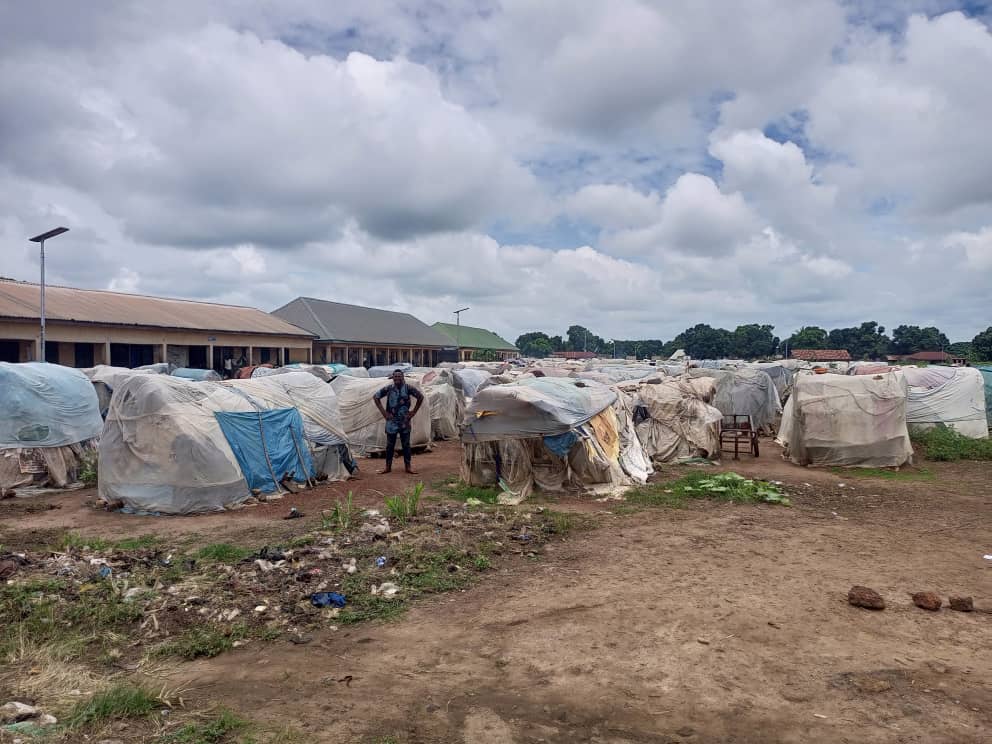
For displaced families, the implications are immediate. Poor nutrition, unsafe living conditions and inadequate sanitation can worsen health problems, reduce people’s capacity to work and further deepen their dependence on humanitarian assistance.
The economic cost of displacement
Beyond the humanitarian emergency, Abah said prolonged displacement destroys the economic foundations of families and communities, particularly those whose livelihoods depend on farming, livestock, petty trading and other informal activities.
When conflict forces people from their ancestral communities, they lose access to farmlands, productive assets, markets, social networks and the economic relationships that previously sustained their households.
The consequences, he said, extend beyond immediate loss of income to depleted savings, weakened productive capacity, growing dependency and the inability of families to plan for their future.
He noted that many displaced people still engage in petty trading, casual labour, small-scale farming and other survival activities, demonstrating their resourcefulness despite difficult conditions.
However, he cautioned against mistaking such survival strategies for genuine economic recovery.
“Displaced people are not simply waiting for assistance,” Abah said, noting that many were making efforts to sustain themselves despite the absence of stable livelihoods and productive resources.
He argued that livelihood restoration should be incorporated into humanitarian planning from the beginning, rather than treated as a secondary intervention after emergency relief.
According to him, displaced people need access to land, agricultural inputs, vocational opportunities, credit facilities, markets and other resources that can help them rebuild their economic independence.
The wider consequences, he added, extend to host communities and government, as displacement places additional pressure on healthcare facilities, schools, housing, public infrastructure and local economic resources, while disruptions to farming also affect agricultural production and markets.
When humanitarian organisations withdraw
One of the most critical issues highlighted by Abah’s research is the potential disruption of essential services following the downscaling or withdrawal of humanitarian organisations from displacement camps.
He said his findings raised concerns about whether government institutions and other humanitarian actors were adequately prepared to sustain services previously provided by organisations leaving certain locations.
Citing healthcare interventions previously provided by Médecins Sans Frontières (MSF) and food support associated with the International Committee of the Red Cross (ICRC), Abah said reductions in humanitarian presence could leave gaps that were not necessarily filled by incoming organisations.
He explained that the presence of a replacement organisation did not automatically mean displaced people continued to receive services at the same level, particularly where the incoming organisation lacked the financial, technical or operational capacity of its predecessor.
The concern, he said, was particularly significant for healthcare, where disruptions in services could further expose already vulnerable populations to risks.
“When a humanitarian organisation withdraws from a displacement setting, who assumes responsibility for the services and needs it previously addressed?” he asked.
He argued that humanitarian exits should be accompanied by realistic transition arrangements involving government institutions, incoming organisations and other relevant partners, with clear responsibilities and assessments of the capacity required to sustain essential services.
Unequal access and forgotten communities
Abah also identified geographical inequality in humanitarian assistance, saying camps closer to Makurdi and its surrounding areas often appeared to receive greater visibility and attention than some locations in remote parts of Benue State.
While insecurity remains a significant operational challenge for humanitarian organisations, he warned that displaced people in difficult-to-access communities risk becoming doubly disadvantaged.
Such populations, he said, suffer the consequences of displacement and may also receive less assistance because of their geographical location and the security difficulties involved in reaching them.
He called for improved humanitarian access planning, stronger coordination with local structures and deliberate strategies to ensure assistance is allocated according to assessed needs and vulnerability, rather than proximity or ease of access.
Abah acknowledged the genuine security challenges facing humanitarian workers but maintained that these difficulties made collaboration and context-sensitive approaches to aid delivery even more important.
Bridging research and policy
The scholar said one of the major gaps his research exposed was the disconnect between the global mandates of humanitarian organisations and the local expectations of displaced populations.
He argued that humanitarian interventions must be informed by the actual priorities of affected people, with meaningful consultations incorporated into programme design, implementation, monitoring and evaluation.
He also advocated integrated humanitarian support, partnerships between organisations, improved coordination, responsible exit strategies and stronger institutional accountability.
Abah maintained that government must not relinquish its responsibility to displaced citizens to humanitarian organisations, stressing that international agencies, NGOs and civil society actors are expected to complement rather than replace the state’s responsibility for citizens’ protection and welfare.
He further called for stronger coordination among federal, state and local institutions, alongside sustained funding and effective monitoring of humanitarian programmes.
For him, emergency relief alone cannot resolve the consequences of prolonged displacement. Education, social protection, livelihood restoration and long-term recovery must also become part of the response.
He said the ultimate objective should be to create conditions for displaced people to return voluntarily, safely and with dignity to their ancestral communities, while ensuring that those unable to return receive adequate protection and support.
A three-year journey sustained by sacrifice
Behind the research lies a demanding personal journey.
Abah said completing his doctoral studies in three years while combining research with his responsibilities as a lecturer required discipline, sacrifice and determination.
The fieldwork, he said, involved travelling between communities, navigating changing security conditions, securing access to research locations and documenting the experiences of people affected by violence and displacement.
He also disclosed that he undertook the research without institutional funding, personally navigating the financial demands of doctoral studies, travel and fieldwork.
Despite the pressures, he said his conviction about the importance of the research kept him going, particularly his determination to ensure the experiences and expectations of displaced people were represented in academic and policy discussions.
Abah attributed his success principally to God, while acknowledging the contributions of friends, family, mentors, colleagues and supporters who provided financial, emotional and academic assistance throughout the journey.
He particularly acknowledged his doctoral supervisor, Professor I. O. Albert, whom he described as an academic father whose intellectual guidance, mentorship and encouragement were instrumental to his development and timely completion of the programme.
He also credited his friend and mentor, Dr Danladi Abah of the University of Ghana, for financial assistance, encouragement and unwavering support during the difficult phases of his research.
His wife, Lydia O. Joel-Abah, he said, made significant sacrifices through her love, patience and understanding, particularly during the demanding periods of the doctoral journey.
Abah defended his thesis on February 17, 2026, and described the doctorate as a beginning rather than the conclusion of his academic journey.
Beyond the university walls
With his doctorate, Abah said he intends to continue engaging government institutions, humanitarian organisations, civil society actors and development partners through research publications, policy briefs, public lectures and stakeholder dialogues.
He also plans to pursue further research in humanitarian governance, digital participation, everyday peacebuilding, citizenship and the contributions of displaced communities to their own security.
For the lecturer, the ultimate value of humanitarian research should not be measured solely by the number of food items distributed, shelters constructed or programmes implemented, but by whether interventions meet the expectations of displaced populations and improve their living conditions.
His central argument is that humanitarian organisations must look beyond their institutional mandates to the lived realities of the people they serve.
In a country where displacement continues to disrupt livelihoods, communities and public resources, the challenge is not only how to provide emergency assistance, but how to ensure that support is sustainable, coordinated and capable of helping people rebuild their lives.
For Abah, that is where research must meet responsibility — and where a PhD must begin to make a difference beyond the classroom.
